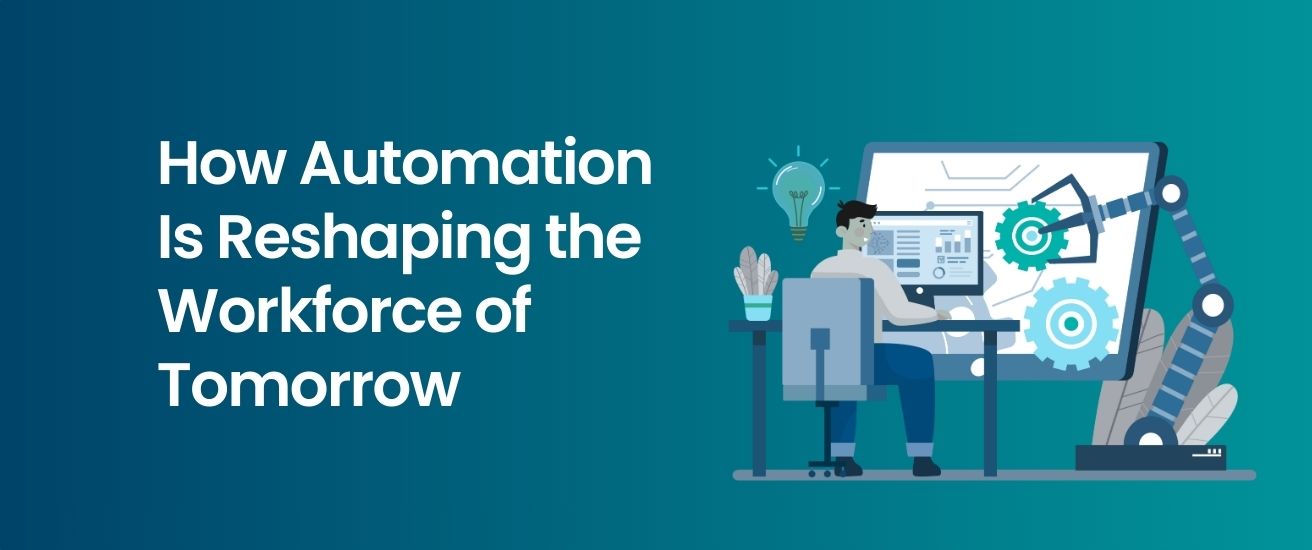
How Automation Is Reshaping the Workforce of Tomorrow

December 18, 2025
5 min read
Introduction to Automation and the Future of Work
Why automation is no longer optional
Automation is no longer a futuristic idea reserved for tech giants and research labs. It has quietly become part of everyday work life. From automated emails and chatbots to intelligent hiring platforms and cloud-based workflows, automation is reshaping how work gets done. The workforce of tomorrow is being built today, and automation is laying the foundation.
Think of automation like a reliable assistant that never gets tired. It handles repetitive tasks, reduces errors, and frees humans to focus on work that actually requires thinking, creativity, and judgment. Businesses that embrace this shift are not replacing people; they are redefining how people add value.
Understanding Automation in the Modern Workplace
What automation really means today
Automation today is not just about machines replacing manual labor. It is about software, algorithms, and systems taking over repetitive, rule-based tasks. This includes data entry, report generation, customer support queries, scheduling, and even parts of decision-making.
Modern automation blends seamlessly into existing workflows. Employees may not even realize automation is at work, yet it quietly improves efficiency behind the scenes.
From basic tools to intelligent systems
Earlier automation focused on simple triggers and actions. Today, intelligent automation combines artificial intelligence, machine learning, and data analytics. These systems can learn patterns, adapt over time, and support complex processes such as recruitment screening, fraud detection, and predictive maintenance.
The Evolution of Work Through Technology
Past industrial shifts and lessons learned
Every major technological shift has reshaped the workforce. The industrial revolution introduced machines. The digital revolution introduced computers. Automation is simply the next chapter. History shows that while some roles fade, new roles always emerge.
The key lesson is adaptation. Workers and organizations that adapt early benefit the most.
How Automation Is Reshaping Job Roles
Tasks versus jobs: what is truly changing
Automation does not eliminate jobs overnight; it automates tasks. A single job often includes dozens of tasks, and automation typically handles only a portion of them. This reshapes roles rather than erasing them.
For example, HR professionals now spend less time sorting CVs and more time engaging with candidates and improving company culture.
Rise of hybrid human-machine roles
New roles are emerging where humans and machines work together. Employees supervise automated systems, analyze outputs, and make strategic decisions. These hybrid roles are becoming the norm across industries.
Automation and Skill Transformation
Hard skills vs soft skills in an automated era
As automation handles technical repetition, human skills grow in importance. Skills such as problem-solving, communication, creativity, and emotional intelligence are becoming critical.
At the same time, digital literacy is essential. Understanding how automated systems work, even at a basic level, empowers employees rather than replacing them.
Impact of Automation on Different Industries
IT and software development
In IT, automation accelerates development, testing, deployment, and monitoring. Developers now focus more on architecture and innovation instead of repetitive debugging and manual deployment tasks.
Manufacturing and logistics
Automation has transformed production lines, inventory management, and supply chains. Smart systems optimize workflows, reduce waste, and improve safety.
HR, recruitment, and operations
AI-powered automation is reshaping hiring, onboarding, payroll, and performance management. Companies can now hire faster, more fairly, and more efficiently.
Automation as a Productivity Multiplier
Doing more with fewer resources
Automation enables businesses to scale without proportionally increasing costs. Teams become more productive, turnaround times shorten, and quality improves. It is like upgrading from a manual bicycle to an electric one—you still steer, but you go much farther with less effort.
The Human Side of Automation
Employee concerns, trust, and adaptability
Fear of job loss is a common concern. Transparent communication and training are essential. When employees understand that automation supports them rather than replaces them, adoption becomes smoother.
Organizations that involve employees in the automation journey see higher trust and better results.
Automation and Decision-Making
Data-driven decisions over intuition
Automated systems analyze vast amounts of data in seconds. This enables leaders to make informed decisions based on insights rather than assumptions. However, human judgment remains essential to interpret context and ethical implications.
Challenges Businesses Face When Adopting Automation
Cost, change management, and resistance
Automation requires investment, planning, and cultural change. Resistance often comes from uncertainty rather than capability. Clear strategy, phased implementation, and leadership support help overcome these challenges.
Automation, AI, and the Future Workforce
Where artificial intelligence fits in
AI enhances automation by enabling systems to learn and adapt. Together, they form intelligent workflows that continuously improve. The future workforce will collaborate with AI as naturally as using email today.
Preparing Employees for an Automated Future
Upskilling, reskilling, and continuous learning
Continuous learning is no longer optional. Companies must invest in training programs that help employees evolve alongside technology. This creates loyalty, resilience, and long-term success.
How Automation Enables Business Scalability
Growth without operational chaos
Automation standardizes processes, reduces dependency on individuals, and ensures consistency. This allows businesses to grow rapidly without losing control or quality.
Ethical and Responsible Automation
Transparency, bias, and accountability
Responsible automation requires ethical considerations. Systems must be transparent, unbiased, and accountable. Human oversight is essential to ensure fairness and trust.
The Role of Companies Like Codeed Inc in Automation
Building future-ready digital solutions
Codeed Inc plays a critical role in helping businesses adopt automation strategically. From AI-powered platforms to custom software and cloud solutions, Codeed Inc enables organizations to build efficient, scalable, and future-ready workforces.
The Road Ahead: What the Workforce of Tomorrow Looks Like
Human creativity supported by intelligent systems
The workforce of tomorrow is not human versus machine. It is human plus machine. Creativity, strategy, and empathy will define success, supported by intelligent automation handling the rest.
Conclusion
Automation is reshaping the workforce in profound and irreversible ways. It is redefining roles, transforming skills, and enabling businesses to operate smarter and faster. Organizations that embrace automation thoughtfully will not only survive but thrive in the future of work. The key lies in balance—leveraging technology while empowering people.
Call to Action:
If your business is ready to embrace automation and build a future-ready workforce, Codeed Inc is here to help. Connect with our team today to design intelligent, scalable automation solutions tailored to your business goals.
FAQs
1. Will automation completely replace human jobs?
No. Automation replaces tasks, not entire jobs, and creates new roles focused on higher-value work.
2. Which skills are most important in an automated workforce?
Problem-solving, communication, creativity, adaptability, and digital literacy are crucial.
3. Is automation only for large enterprises?
No. Small and medium businesses can also benefit significantly from automation.
4. How can employees prepare for automation?
By continuously learning, upskilling, and embracing technology as a tool rather than a threat.
5. How does Codeed Inc support automation adoption?
Codeed Inc delivers custom automation, AI, and digital solutions that help businesses transition smoothly and effectively.


Table of Content
 5.0
5.0
Unlock your new design team today
Get a team of skilled professionals and all the benefits that come with top-grade in-house designers—for a flat fee.
Book a free call